
What Is Lean Methodology?
Lean methodology is a management system for creating more customer value with fewer resources. It improves the complete flow of work from an identified customer need to the delivery of a product or service by removing unnecessary activity, making problems visible, and involving the people who perform the work in continuous improvement.
Lean originated from the Toyota Production System, but its application is no longer limited to automotive manufacturing. The same principles can improve production, logistics, healthcare, administration, product development, software delivery, and other process-based work.
Its five widely used principles are to define value, map the value stream, create flow, establish pull, and pursue perfection. Lean is therefore not a single tool, a short-term cost program, or a request to work faster. It is a repeatable way to design, manage, learn from, and continuously improve work.
Why Lean Methodology Still Matters
Many organizations appear busy while their customers are still waiting. Machines run, inboxes fill, meetings take place, and departments reach their individual targets, yet orders remain in queues, approvals move slowly, defects require rework, and employees spend time searching for information or correcting avoidable problems. High activity does not automatically create fast or reliable value delivery.
Lean methodology changes the unit of analysis. Instead of optimizing every department, machine, or person in isolation, it examines the entire value stream. The central question is not whether every resource is continuously occupied. It is whether customer value can move through the process safely, correctly, predictably, and with as little interruption as possible.
This requires more than waste reduction. A sustainable Lean system connects customer purpose, process design, problem visibility, leadership behavior, and employee development. It uses practical methods, but the methods only create lasting results when they support a clear business problem and a culture in which teams can identify, investigate, and solve problems every day.
What This Lean Guide Covers
Use the links below to move directly to the part of Lean methodology that is most relevant to your current question.
Lean Methodology at a Glance
The following ideas form the foundation of a practical Lean management system.
- Customer value—not internal activity—defines what the process should deliver.
- The complete value stream matters more than isolated departmental efficiency.
- Flow and pull reduce queues, excess inventory, delays, and hidden problems.
- Standards create a baseline for learning rather than a reason to stop improving.
- Continuous improvement depends on people who can identify and solve problems.
The Core Structure of Lean
5
Core Lean principles
8
Common types of waste
3
Muda, Mura and Muri
2
Toyota system pillars
What Lean Methodology Changes in Practice
Conventional performance management often encourages local optimization. Purchasing may buy larger quantities to reduce unit prices. Production may build larger batches to keep machines running. Logistics may add inventory to protect delivery performance. Each decision can look efficient within one department while increasing lead time, tied-up capital, complexity, and risk across the complete process.
Lean methodology evaluates work from the perspective of the value stream. A value stream includes the activities and information required to move from a customer need to a delivered result. These activities can be divided into work that directly creates customer value, work that is currently necessary but does not create value, and pure waste that can be removed without reducing the value of the result.
This short video is helpful when readers need a direct explanation of lead time before continuing with value stream and flow concepts.
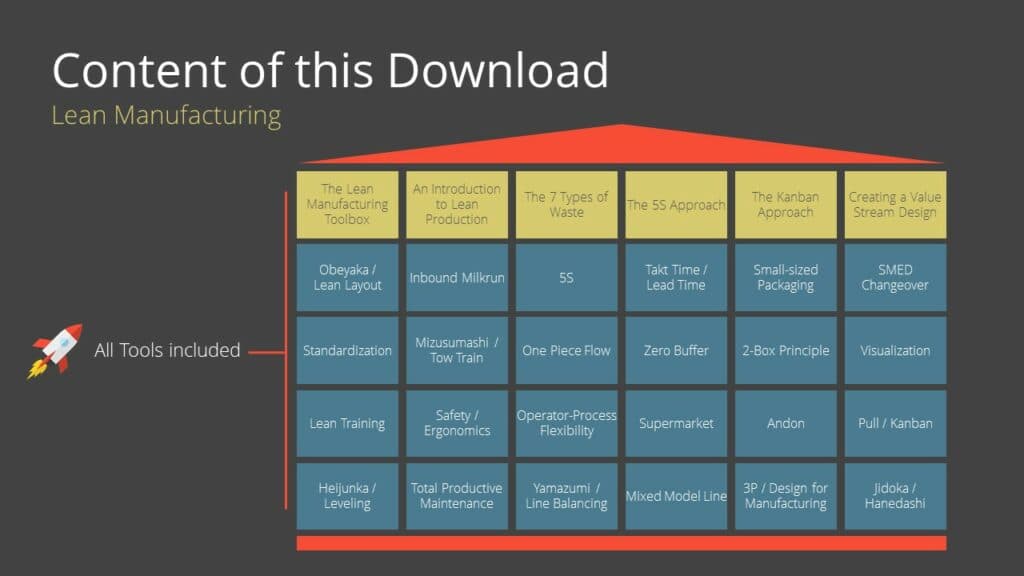
Seeing the complete path of value helps teams separate customer value, necessary support work, and removable waste.
Value Is Defined by the Customer
An activity is not valuable simply because it requires time, expertise, or expensive equipment. From a Lean perspective, it creates value when it changes the product, service, or information in a way the customer needs, is performed correctly, and contributes directly to the requested result. This distinction prevents organizations from protecting complicated routines merely because they have always existed.
Flow Is More Important Than Busyness
A process can contain highly utilized resources and still perform poorly. Work may spend only minutes being processed but days waiting between steps. Lean therefore pays close attention to queues, handoffs, batch sizes, interruptions, missing information, rework loops, and bottlenecks. Improving the movement of value usually matters more than maximizing the utilization of every individual resource.
Problems Become Inputs for Learning
Lean organizations do not assume that problems can be eliminated once and for all. They create conditions in which abnormalities become visible early. Teams compare actual performance with an agreed standard, investigate the gap, test a countermeasure, and update the standard when the new method proves more effective. The objective is not a problem-free appearance, but a stronger capability to recognize and solve problems.
From the Toyota Production System to Lean
Lean methodology grew out of the Toyota Production System, which was designed to deliver high quality, short lead times, and low waste even with limited resources and changing demand.
Its two central pillars are Just-in-Time and Jidoka. Together they improve flow while making problems visible instead of hiding them in inventory, delay, or rework.
Lean later translated this logic into a broader management approach for many industries: focus on customer value, improve the full flow of work, and use problems as opportunities to learn.
The Five Principles of Lean Methodology
The five Lean principles provide a logical sequence for improving a value stream. They are not five independent tools. Each principle changes how an organization understands customer needs, designs work, releases demand, and learns from performance.
1. Define Value
Lean starts by defining value from the standpoint of the customer. This means identifying the result the customer actually needs, including relevant expectations for quality, function, timing, service, and price. A general statement such as “customers want quality” is not specific enough. Teams need to understand which product or service characteristics solve the customer’s problem and which activities do not contribute to that result.
This step also reveals conflicting assumptions. A company may invest in options, reports, approvals, packaging, or technical features that consume resources but do not improve the customer outcome. Defining value creates a common reference point for later decisions about process design and improvement priorities.
2. Map the Value Stream
The value stream includes all significant actions required to deliver a product or service, including both material and information flow. Value Stream Mapping makes the current process visible from beginning to end. It records processing steps, waiting time, inventory, handoffs, information signals, lead time, and other conditions that are difficult to understand when each department looks only at its own work.
The purpose is not to create a visually perfect map. The map should help the team distinguish value-creating work, currently necessary non-value-creating work, and removable waste. It should also make the main causes of delay and instability visible so that improvement efforts address the complete system rather than isolated symptoms.
3. Create Flow
After unnecessary steps have been challenged, the remaining value-creating work should move as continuously as the process allows. Flow means reducing the stops, queues, batching, transfers, and interruptions between activities. In manufacturing, this can involve smaller batches, cellular layouts, balanced work content, reliable equipment, and one-piece flow. In office processes, it can mean fewer approval loops, clearer ownership, complete information, and limits on parallel work.
Flow does not mean removing every buffer without understanding the process. It requires stable work, capable equipment, clear standards, appropriate staffing, and fast responses to abnormalities. The objective is a process that moves predictably rather than one that only appears fast when nothing goes wrong.
4. Establish Pull
A pull system releases work because the next process or the customer needs it—not because an upstream resource has available capacity. This reduces overproduction, excess work in progress, long queues, and outdated priorities. Where direct continuous flow is not possible, Kanban signals, supermarkets, FIFO lanes, and defined work-in-progress limits can connect the processes.
Pull also improves decision-making in knowledge work. Instead of starting every available request, a team finishes prioritized work before accepting more. This makes workload, capacity, blockers, and service expectations easier to manage.
5. Pursue Perfection
Perfection is not a promise that a process will eventually contain no problems. It describes the discipline of repeatedly closing the gap between current performance and the desired condition. Teams establish a standard, compare actual performance with that standard, investigate causes, test countermeasures, and incorporate successful learning into the next standard.
This principle turns Lean from a project into a management system. Leaders create direction, provide time for problem-solving, remove structural barriers, and develop the capability of employees. Improvement becomes part of daily work rather than an occasional event led only by specialists.
CORE PRINCIPLE
Lean is not about making people work faster. It is about designing work so value flows with fewer interruptions, fewer errors, and less unnecessary effort.
Muda, Mura and Muri: More Than Waste Reduction
Lean is often reduced to the elimination of waste, or muda. Waste is important, but visible waste is frequently a symptom of two additional conditions: mura, meaning unevenness, and muri, meaning overburden. A process exposed to unstable demand, inconsistent priorities, or large workload peaks will repeatedly create waiting, inventory, errors, and firefighting even after individual waste-removal activities.
Muda: Activity That Does Not Create Value
Muda includes work that consumes time or resources without contributing to the customer-required result. Some non-value-creating work may currently be necessary because of regulation, technology, or existing process constraints. Pure waste can be removed without reducing customer value.
Mura: Unevenness and Instability
Mura appears when demand, workload, staffing, material availability, or process performance fluctuates unnecessarily. Teams alternate between waiting and overload. Production plans change frequently, priorities compete, and people compensate through expediting, overtime, or additional inventory.
Muri: Overburden
Muri occurs when people or equipment are expected to operate beyond reasonable or sustainable conditions. Poor ergonomics, unrealistic cycle times, missing information, excessive task switching, and overloaded machines can increase defects, breakdowns, safety risks, and employee frustration.
The Eight Common Types of Lean Waste
The original Lean framework commonly identifies seven categories of waste. Many organizations add unused human talent as an eighth category. The DOWNTIME acronym is often used to remember all eight.
- Defects
- Errors, incorrect information, damaged products, missed requirements, and any work that must be inspected, corrected, repeated, or discarded.
- Overproduction
- Producing more, earlier, or faster than the next process or customer requires. It often creates additional inventory and hides other problems.
- Waiting
- Idle time caused by missing material, unavailable decisions, equipment problems, unbalanced work, incomplete information, or long queues.
- Non-Utilized Talent
- Failing to use the knowledge, experience, creativity, and problem-solving ability of the people closest to the work.
- Transportation
- Unnecessary movement of material, documents, equipment, or information between locations, systems, departments, or process steps.
- Inventory
- More raw material, work in progress, finished goods, open requests, or unprocessed information than the current process needs.
- Motion
- Unnecessary movement by people, including walking, reaching, searching, switching systems, navigating folders, or repeatedly rearranging work.
- Extra Processing
- Work beyond the customer requirement, including duplicate data entry, excessive approvals, unnecessary precision, repeated reporting, and redundant checks.
The categories help teams learn to see waste, but they should not become a checklist exercise. The more important question is why the process creates the waste and which system condition must change to prevent it from returning.
Essential Lean Tools and When to Use Them
Lean tools are most effective when selected in response to a clearly observed process problem. The table below connects common operational problems with methods that can help a team understand or improve them.
| Process Problem | Relevant Lean Tools | What the Tools Help Change |
|---|---|---|
| The end-to-end process is unclear | Value Stream Mapping, Process Mapping | Visualize lead time, information flow, queues, handoffs, and improvement priorities. |
| Workplaces are unstable or difficult to understand | 5S, Visual Management | Create clear locations, conditions, ownership, and visible abnormalities. |
| The same task is performed differently | Standardized Work, Job Instructions | Define the current best-known method and create a baseline for improvement. |
| Too much work is started at the same time | Kanban, FIFO, WIP Limits | Control work release, expose bottlenecks, and improve completion flow. |
| Changeovers force large production batches | SMED | Separate internal and external work and reduce the time required to switch products. |
| Defects continue to move downstream | Jidoka, Poka-Yoke, Root Cause Analysis | Detect abnormalities earlier, stop recurrence, and build quality into the process. |
| Capacity does not match customer demand | Takt Time, Line Balancing, Heijunka | Align work content, staffing, sequence, and production rhythm with actual demand. |
For a broader set of ready-to-use methods, see the Lean tools and practical methods resources and the full LeanActivity Toolbox.
Use this introduction when readers need a quick explanation of takt time and cycle time, especially before moving into flow, balancing, and capacity-related tools.
READY-TO-USE LEAN RESOURCES
Put Lean Methodology into Practice with 70+ Lean Tools
Download editable presentations, templates, workshop materials, and step-by-step implementation guides for manufacturing, office, leadership, and digitalization.
Instant digital access with materials you can customize for internal workshops and improvement projects.
How to Implement Lean Methodology
A Lean implementation should begin with a meaningful business or customer problem, not with a plan to deploy as many tools as possible. The first improvement area should be important enough to matter but focused enough that a team can observe the complete process, test changes, and learn from the result.
The following five-step approach connects Lean principles with practical implementation. It can be used for a production line, administrative process, logistics flow, service process, or cross-functional value stream.
Define the Customer Problem
Clarify who receives the process output, what that customer needs, and which current gap matters. Select a small set of measures such as lead time, first-pass quality, delivery reliability, work in progress, productivity, safety, or customer response time.
Observe the Current Process
Go to the place where the work happens. Follow real orders, requests, material, or information from start to finish. Record processing time, waiting time, queues, handoffs, defects, decisions, and information signals. Create a current-state map based on observation rather than assumptions.
Stabilize and Expose Problems
Before pursuing sophisticated solutions, establish basic process stability. Clarify expected conditions, organize the workplace, define the current method, secure critical equipment and information, and make deviations visible. Stability does not eliminate problems; it makes recurring patterns easier to understand.
Improve Flow and Pull
Remove unnecessary steps, reduce handoffs and batch sizes, balance work, and bring connected activities closer together. Where continuous flow is not feasible, introduce clear pull signals, FIFO rules, supermarkets, or work-in-progress limits. Test changes on a manageable scale before expanding them.
Standardize, Review and Repeat
Compare the result with the original problem and measures. Document the improved method, train the affected people, establish ownership, and monitor whether the process remains stable. Use PDCA to address the next gap. A Lean transformation grows through repeated learning cycles, not one final rollout.
Practical Example: Reducing Changeover Time with SMED
This LeanActivity project example shows how a specific Lean method can improve capacity without asking employees to simply work faster.
Starting point
A production process required frequent product changes, but each changeover occupied the equipment for an extended period. Operators searched for tools and materials, activities were completed sequentially, and several preparation tasks only started after the machine had already stopped. The long changeover reduced available capacity and encouraged larger production batches.
Measure
The team observed and recorded the complete setup process. Each activity was classified as internal work, which required the machine to be stopped, or external work, which could be completed while production was still running. Materials were prepared in advance, responsibilities were clarified, unnecessary motion was removed, and suitable tasks were performed in parallel.
Result
The improved setup sequence reduced the changeover by 65 minutes. The result did not come from increasing individual work speed. It came from removing waiting, searching, avoidable movement, and activities that did not need to be performed during machine downtime. The shorter setup also created better conditions for smaller batches and a more responsive production flow.
Lean Methodology Beyond Manufacturing
Lean began in industry, but its real subject is the flow of value. Any repeatable process can contain waiting, errors, handoffs, and work that is started but not finished.
In office work, Lean can reduce approvals, duplicate entries, and open requests. In logistics, healthcare, and software, it improves flow, visibility, and faster problem-solving. For practical office examples, see the Lean Office Game and Lean office tools.
The tools vary by environment, but the core questions stay the same: What does the customer need, where does work wait, and what prevents better flow and quality?
Lean Management vs. Conventional Process Optimization
Lean differs from approaches that primarily optimize individual resources, departments, or short-term output. The comparison below describes general tendencies rather than claiming that every conventional organization works in exactly the same way.
| Topic | Conventional Approach | Lean Approach |
|---|---|---|
| Primary focus | Departmental output and resource utilization | Customer value and end-to-end flow |
| Work release | Start work when capacity appears available | Release work from actual downstream demand |
| Inventory and queues | Used to protect individual processes | Reduced to expose and solve process problems |
| Quality | Inspect and correct after processing | Detect abnormalities and build quality into work |
| Management | Review reports and escalate deviations | Observe the process and develop problem-solving capability |
| Improvement | Periodic projects led by specialists | Continuous learning integrated into daily work |
Lean Methodology vs. Six Sigma
Lean and Six Sigma are related improvement approaches, but they emphasize different problems. Lean primarily improves value flow and removes non-value-creating activity. Six Sigma places stronger emphasis on reducing process variation and defects through structured analysis and statistical methods.
The two approaches are not mutually exclusive. Lean Six Sigma combines flow-oriented improvement with variation reduction. The appropriate method depends on the problem: a long queue may require flow and work-in-progress changes, while an unstable technical characteristic may require deeper statistical analysis.
| Topic | Lean | Six Sigma |
|---|---|---|
| Primary question | How can value flow with less waste and delay? | How can variation and defects be reduced? |
| Main perspective | Value stream, flow, pull, and problem visibility | Process capability, variation, and defect causes |
| Typical methods | VSM, 5S, Kanban, flow, standard work, SMED | DMAIC, statistical analysis, capability studies, experiments |
| Typical data | Lead time, queues, WIP, flow, cycle time, demand | Distribution, variation, defect rates, capability, correlation |
| Strong use case | Slow or interrupted end-to-end process flow | Unstable output or recurring quality variation |
| Combined approach | Improves speed, visibility, and process simplicity | Adds deeper analysis where variation remains critical |
Why Lean Implementations Often Lose Momentum
Most unsuccessful Lean programs do not fail because the organization selected the wrong Japanese term or missed one tool. They lose momentum because the methods are disconnected from business problems, leadership routines, process ownership, and the development of employees.
Starting with Tools Instead of Problems. A company announces 5S, Kanban, or Value Stream Mapping across every department without defining the customer problem it intends to solve. Teams complete activities, but the connection to performance remains unclear. Begin with a real gap and select methods that help understand or close it.
Optimizing Departments Instead of Value Streams. Local targets can shift cost, inventory, workload, or waiting time to the next process. Lean improvements should be evaluated across the complete flow from customer request to delivery, not only within the department that initiated the change.
Treating Lean as Cost Cutting. When employees associate Lean with headcount reduction, they have little reason to reveal waste or contribute ideas. Sustainable Lean systems use improvement to strengthen competitiveness, quality, delivery, safety, and capability while treating employee knowledge as a central resource.
Running Isolated Improvement Events. A workshop can generate energy and useful changes, but processes gradually return to old behavior when standards, ownership, measures, and daily review routines are missing. Every improvement needs a method for sustaining and continuing the learning.
Automating an Unstable Process. Technology can make an effective process faster, but it can also reproduce waste at greater speed. Before automating, clarify customer demand, remove unnecessary steps, simplify the flow, define the standard, and understand how abnormalities will be detected and handled.
Measuring Activity Instead of Outcomes. Counting workshops, trained employees, completed audits, or implemented tools does not prove that the value stream improved. Connect Lean activity with operational outcomes such as lead time, first-pass quality, delivery reliability, safety, work in progress, and customer experience.
Lean Is a System for Learning
Lean methodology provides a disciplined way to connect customer value, process design, and continuous improvement. Its principles help organizations see the complete flow of work, expose conditions that create waste, and improve the system through practical experiments rather than assumptions.
The tools are important, but they are not the final objective. A mature Lean organization develops people who can observe work, define problems, investigate causes, test countermeasures, and improve standards. That capability allows the organization to respond to changing customer needs without relying permanently on firefighting or isolated improvement projects.
Frequently Asked Questions
Clear answers to common questions about Lean principles, tools, implementation, and scope.
What is Lean methodology in simple terms?
Lean methodology is a way of organizing and improving work so customers receive the value they need with less waiting, waste, rework, and unnecessary effort. It looks at the complete process rather than optimizing each department separately. Teams define customer value, map the value stream, improve flow, introduce pull, and continue learning through repeated problem-solving cycles.
What are the five principles of Lean methodology?
The five principles are: define value from the customer’s perspective, map the complete value stream, create continuous flow, establish pull based on actual demand, and pursue perfection through continuous improvement. The principles form a sequence. They should be applied together rather than treated as five independent tools or projects.
What are the eight wastes in Lean?
The eight commonly used categories are defects, overproduction, waiting, non-utilized talent, transportation, inventory, motion, and extra processing. The original framework generally contained seven categories, with unused human talent later added as an eighth. The categories help teams recognize non-value-creating activity, but identifying the system cause of the waste is more important than simply labeling it.
Is Lean methodology only for manufacturing?
No. Lean developed from the Toyota Production System, but its principles apply to any repeatable flow of work. Organizations use Lean in logistics, healthcare, administration, finance, product development, software delivery, maintenance, and customer service. The specific tools may change, but customer value, flow, quality, problem visibility, and continuous improvement remain relevant.
What is the difference between Lean and Six Sigma?
Lean focuses primarily on improving flow and eliminating non-value-creating activity. Six Sigma focuses more strongly on reducing variation and defects through structured analysis and statistical methods. Lean Six Sigma combines both perspectives. A process with long queues may mainly need Lean flow improvements, while an unstable technical parameter may require Six Sigma analysis.
What is the difference between Lean and Agile?
Lean is a broad management philosophy centered on customer value, flow, pull, waste reduction, and continuous improvement. Agile is a family of approaches commonly used to develop products through short feedback cycles, collaboration, and adaptation. Agile methods have been strongly influenced by Lean thinking, especially through small batches, visual workflow, limited work in progress, and rapid feedback.
Which Lean tool should a company use first?
There is no universal first tool. Start by defining the customer problem and observing the current process. Value Stream Mapping is useful when the end-to-end flow is unclear. 5S and visual management help with unstable workplaces. Standardized work helps when execution varies. Kanban can help when too much work is open, while SMED addresses long changeovers.
How long does Lean implementation take?
A focused process improvement can produce learning within days or weeks, but building a sustainable Lean management system takes much longer. The duration depends on process complexity, leadership behavior, employee involvement, existing stability, and the organization’s ability to maintain standards. Lean should not be treated as a project with one final completion date; it becomes an ongoing way of managing and improving work.
Does Lean methodology mean reducing employees?
Lean should not be defined as a headcount-reduction program. Its purpose is to improve customer value and remove unnecessary work from the process. Employee knowledge is essential for identifying problems and improving methods. When every improvement is immediately associated with job losses, employees have a rational reason to hide waste rather than help eliminate it.
How should Lean improvement be measured?
Measures should reflect the original customer and process problem. Useful indicators can include lead time, first-pass quality, delivery reliability, work in progress, changeover time, productivity, safety, customer response time, and process stability. Avoid measuring success only through the number of workshops, audits, training sessions, or tools introduced.
Sources and Further Reading
The definitions and frameworks used in this guide are based on established Lean and Toyota Production System references.
Continue Learning About Lean
Explore practical tools, visual examples, and Lean applications that build on the methodology explained in this guide.