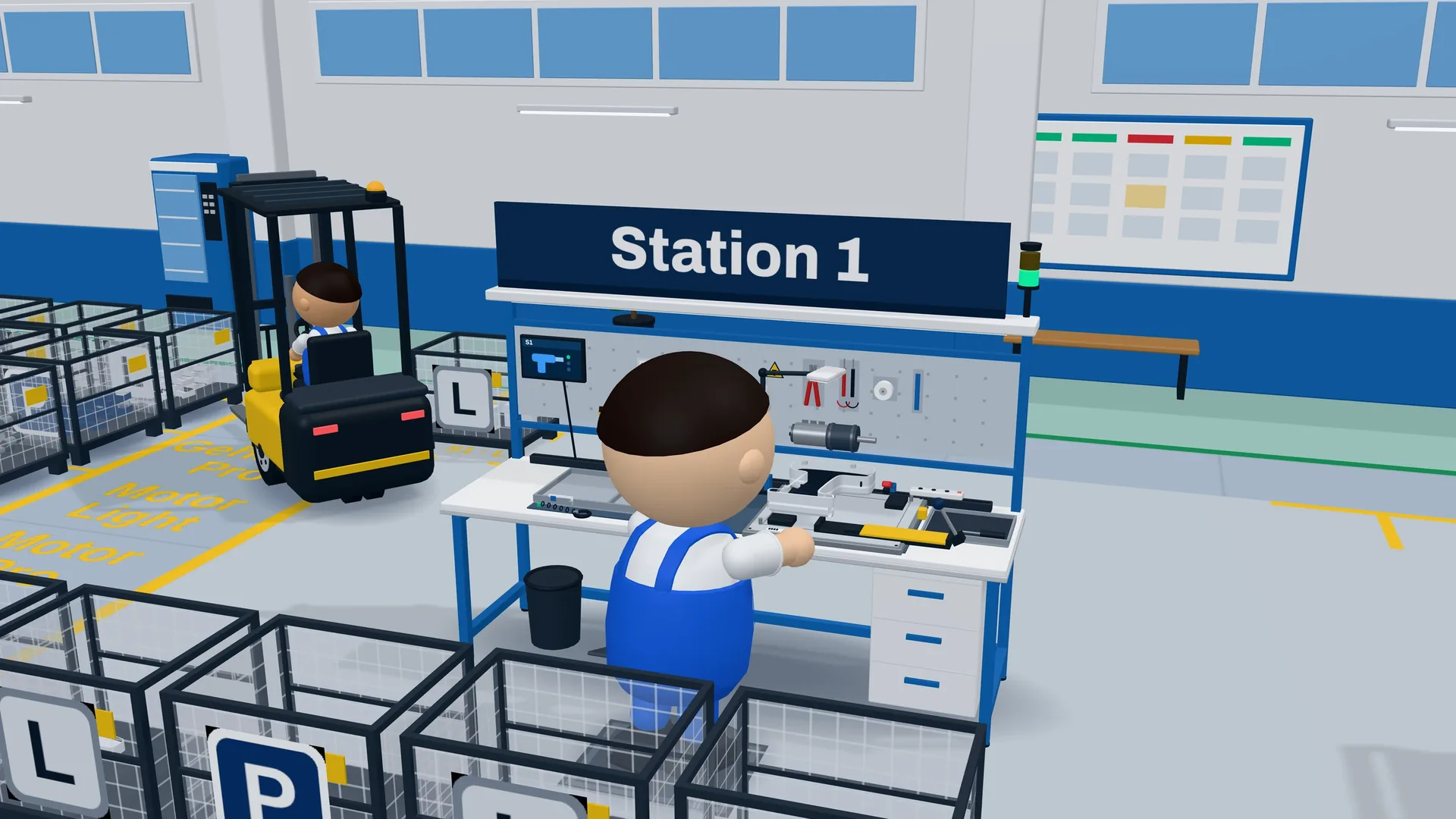
Assembly, stations 1 to 4
Housing & motor, battery, chuck & test, packing. Every station has its own work steps and depends on the one before.
LeanActivity Online Game
One host leads the session, in the training room or in a video call such as MS Teams.
Up to four teams, each running its own factory, all at the same time.
Fewer players? Bots take over the free stations. To try the game, you can even play alone.
A session
Step 01
As the host you open a session in the browser and choose the language. The lobby shows a link, a six-character code and a QR code: share them in your MS Teams call or on the screen in the room.
Step 02
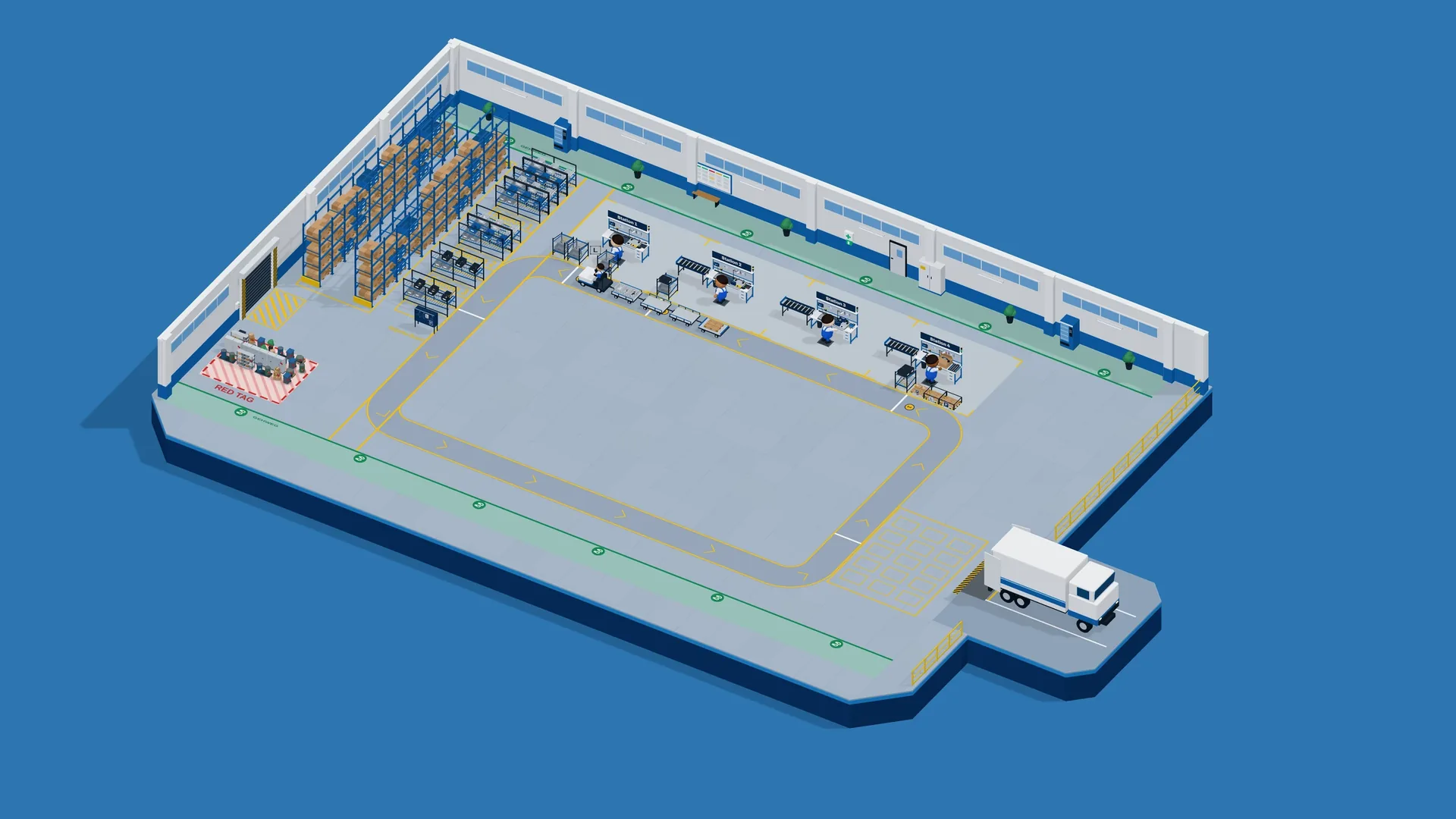
Everyone opens the link on their own computer, enters a name and designs a worker. Teams of 5 fill up on their own, up to four teams and 20 players. Bots take over every free seat, so even a small group runs the whole factory.
Step 03
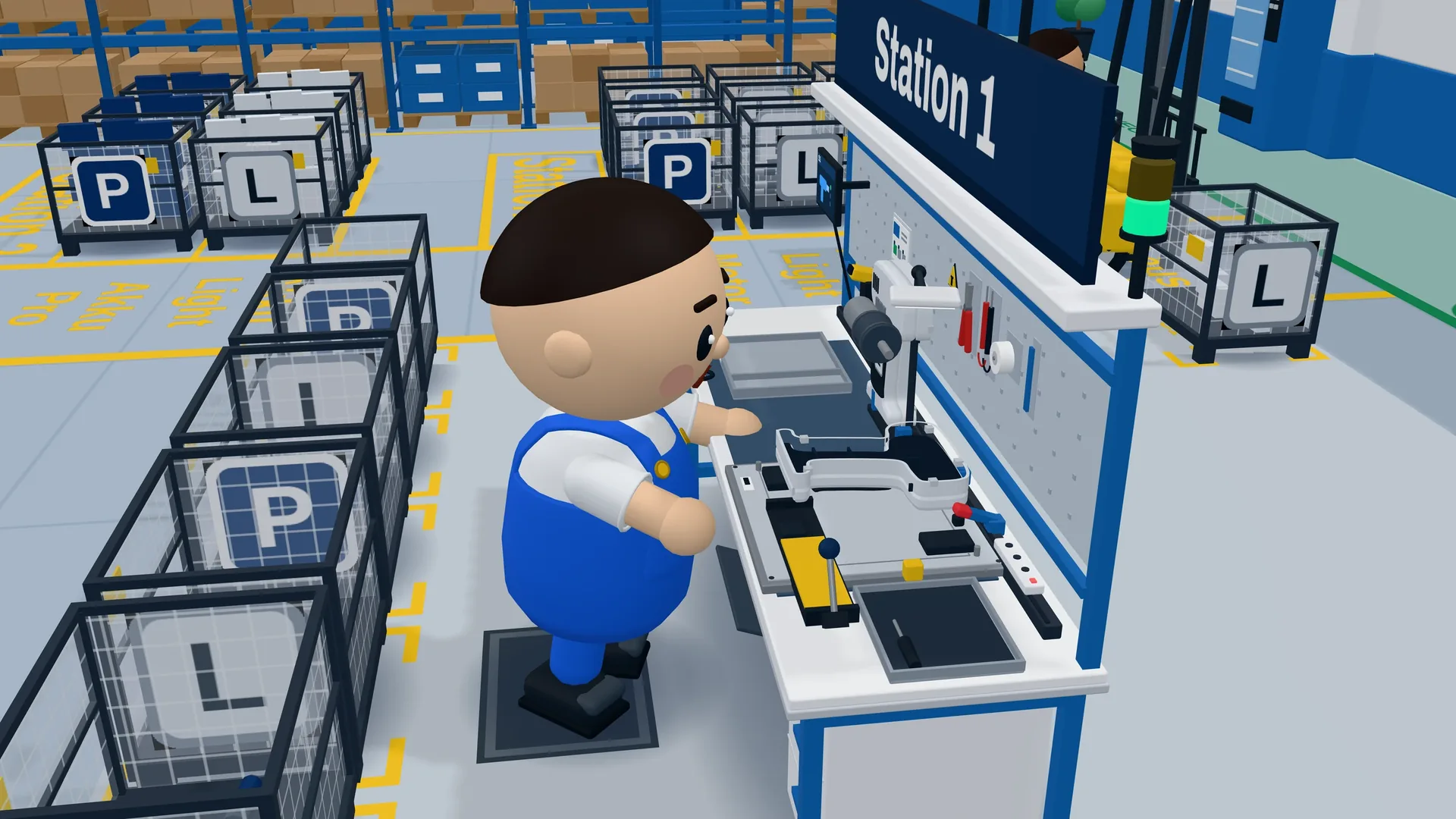
Each player runs one of the four assembly stations or the logistics. Grab the parts, assemble cordless screwdrivers in the Light and Pro models and deliver the customer orders, all with the mouse.
Step 04
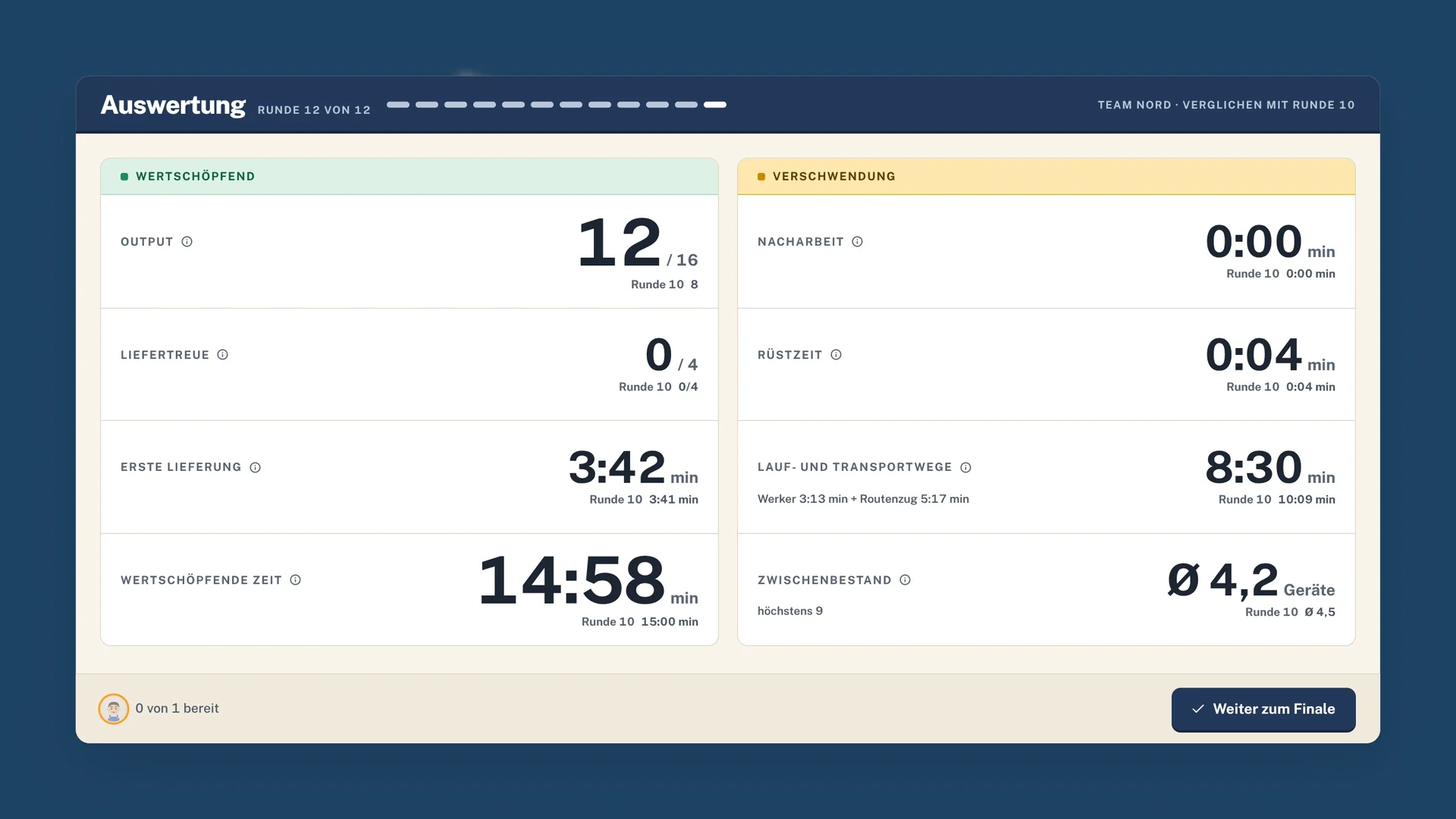
After every shift the game shows the numbers of your factory. In the workshops between the shifts the team changes the factory together and in real time: everyone can move stations, plan the flow and test solutions.
Step 05
The final ranking adds up the Lean points of every team. Compare the first shift with the last, discuss what made the difference and take the lessons to your own shopfloor.
The 12 rounds
Mesh pallets all over the hall, long walks and a forklift that cannot keep up. Your team runs the first shift and feels every problem.
Everything that does not belong goes to the red tag area, and every station tidies up.
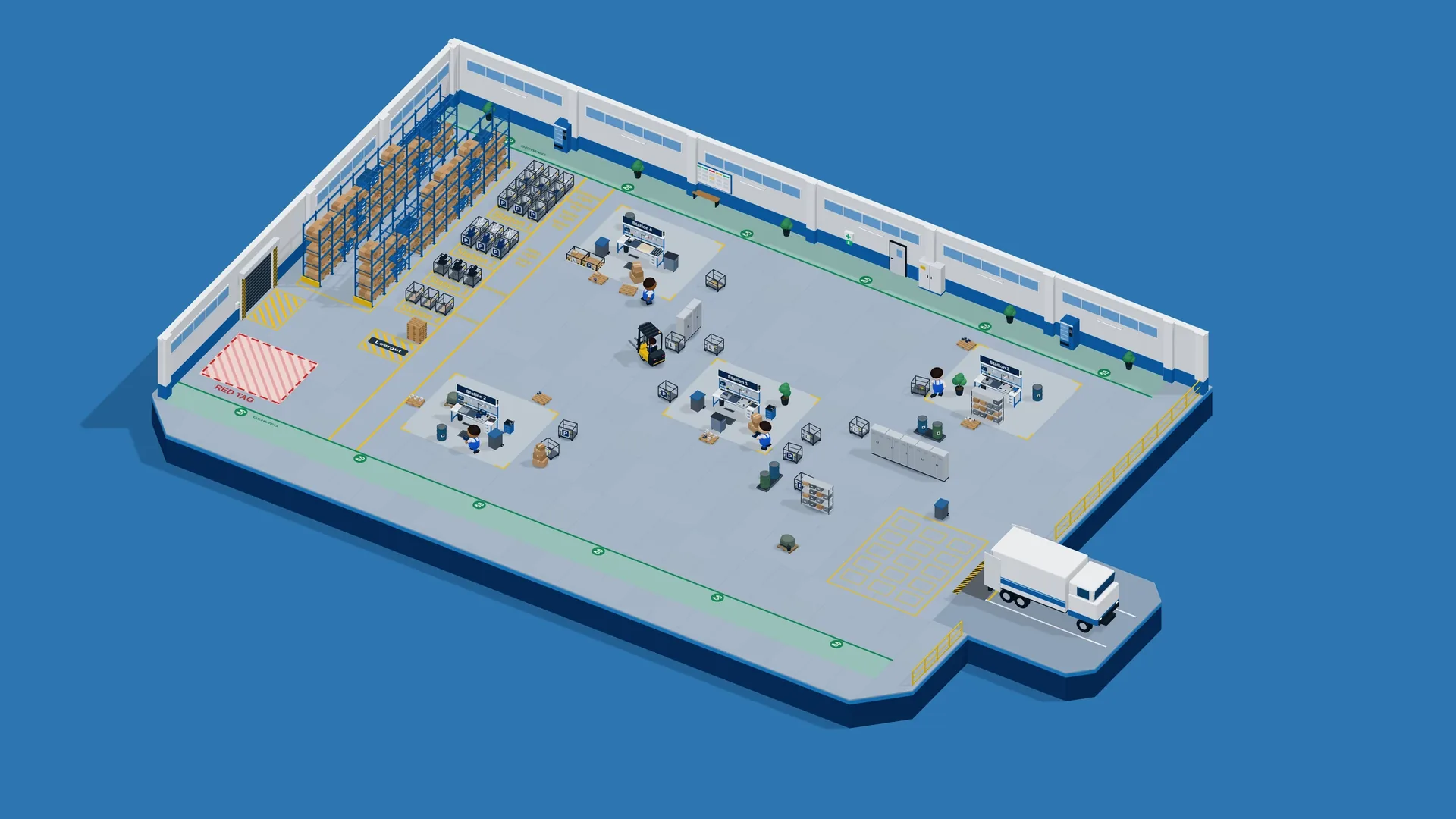
On the hall plan the team pulls the scattered stations together into one line. The walking distance per unit drops sharply.
The second shift runs in the new layout: tidy stations, short ways, pallets between the stations.
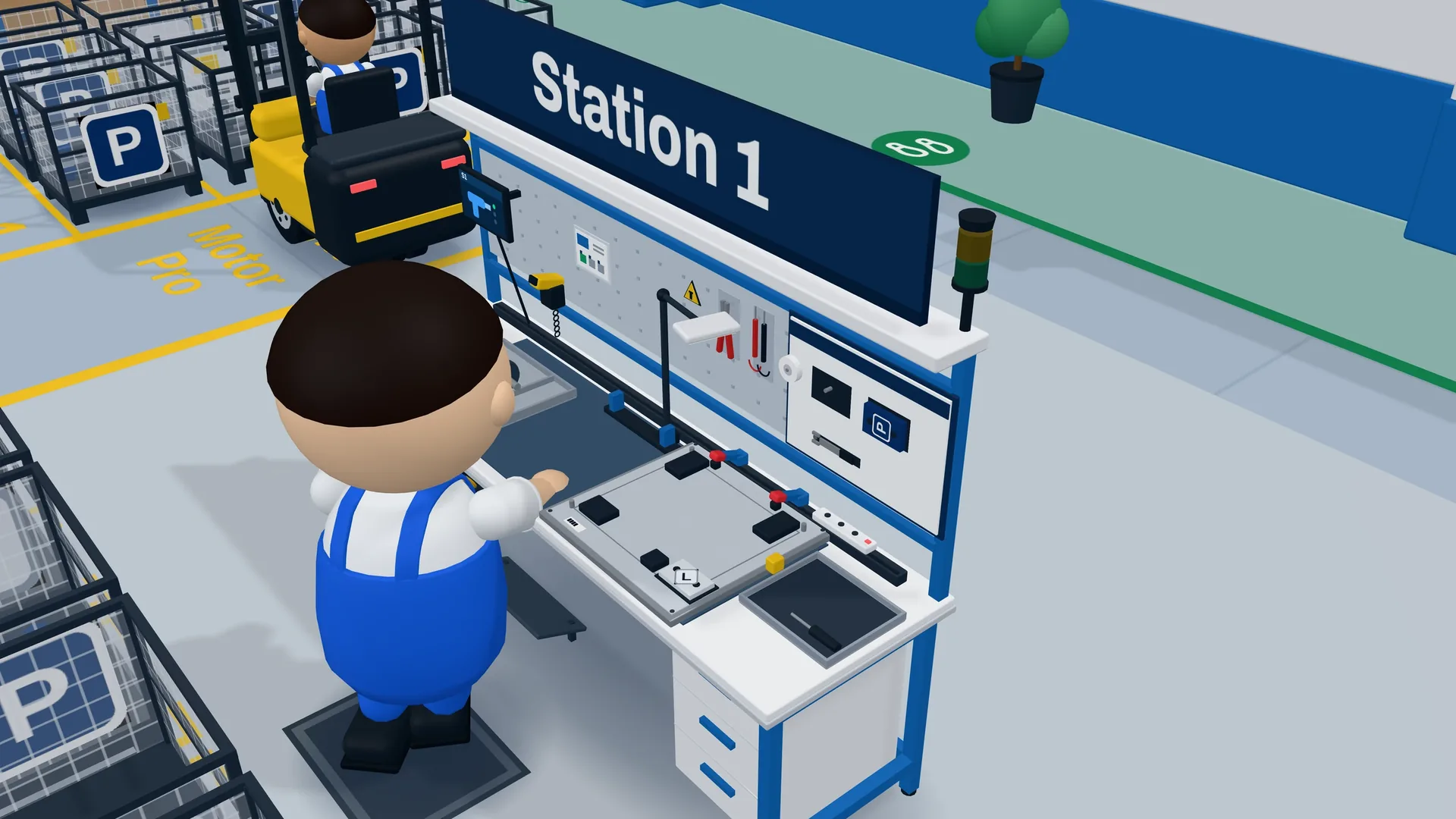
Changing over between the Light and Pro models costs time. With a shadow board or a one-touch slide, 20 seconds become 12 or even 1.
Roller conveyors replace the pallets between the stations: each unit goes on to the next station as soon as it is done.
Units roll from station to station one by one. No more piles of half-finished work in between.
The team records the work content live at every station, then moves work steps until every station works below the takt.
A motor goes in the wrong way round. The team tests three countermeasures and picks the one that makes the mistake impossible.
The balanced, error-proofed line runs at an even pace. Every station has about the same amount of work.
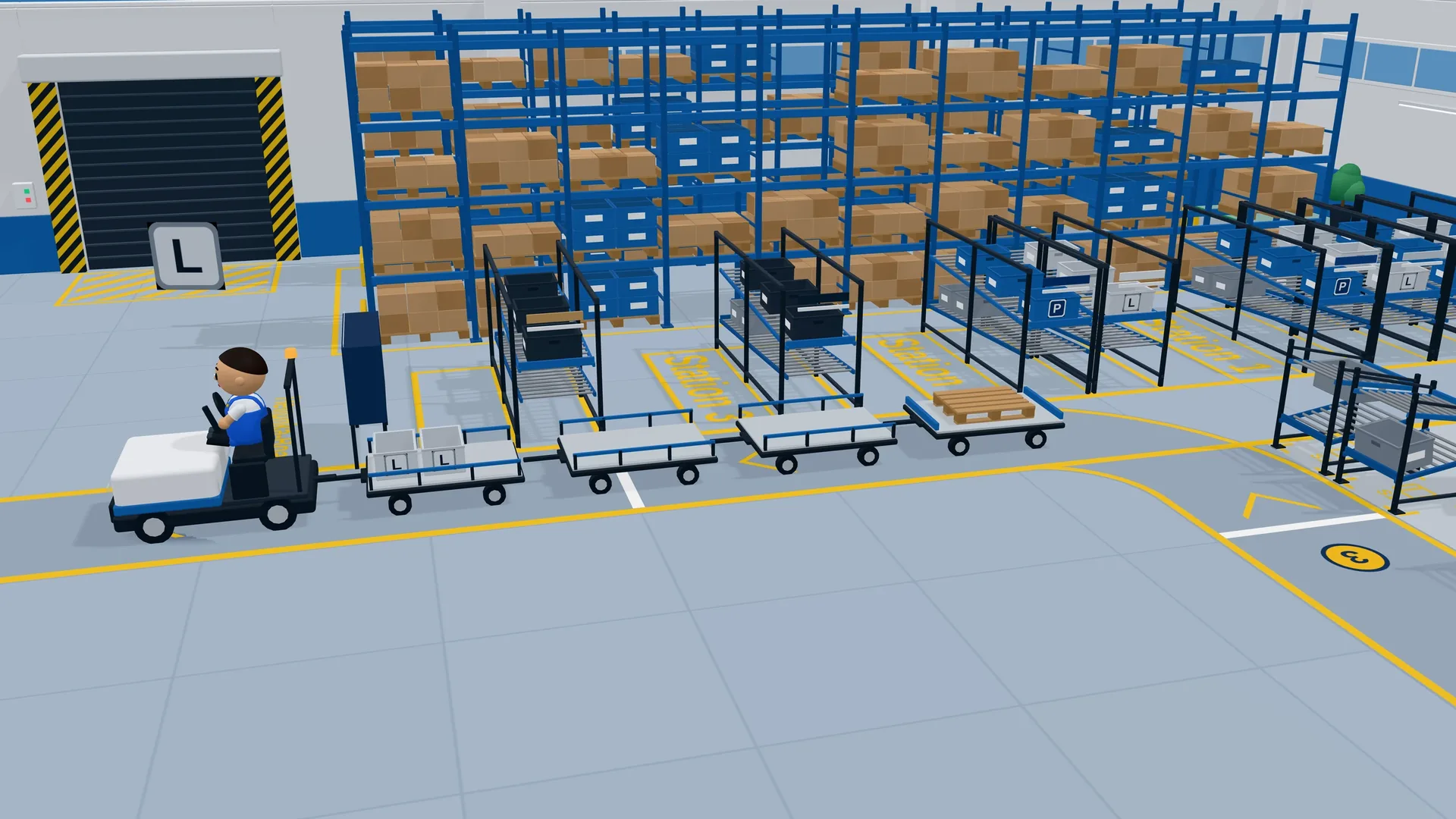
The racks move to a fixed route, and a route train brings the parts from the supermarket instead of the forklift.
The final shift: the route train supplies every station on its loop. Now compare the numbers with your first shift.
After every shift
The game measures every shift for you and compares it with the rounds before. No stopwatch, no spreadsheet.
Units delivered against the customer orders of the shift.
How many orders reached the customer in time.
How long it takes until the first finished unit leaves the factory.
The time in the shift that actually builds product.
Time lost to units that have to be fixed after the test.
Time spent switching between the Light and Pro models.
Time spent walking and moving material through the hall.
How many half-finished units wait between the stations on average.
Who does what
Five seats per team: four assembly stations and the logistics. Every player has a job the others depend on; bots take the free seats.
Housing & motor, battery, chuck & test, packing. Every station has its own work steps and depends on the one before.
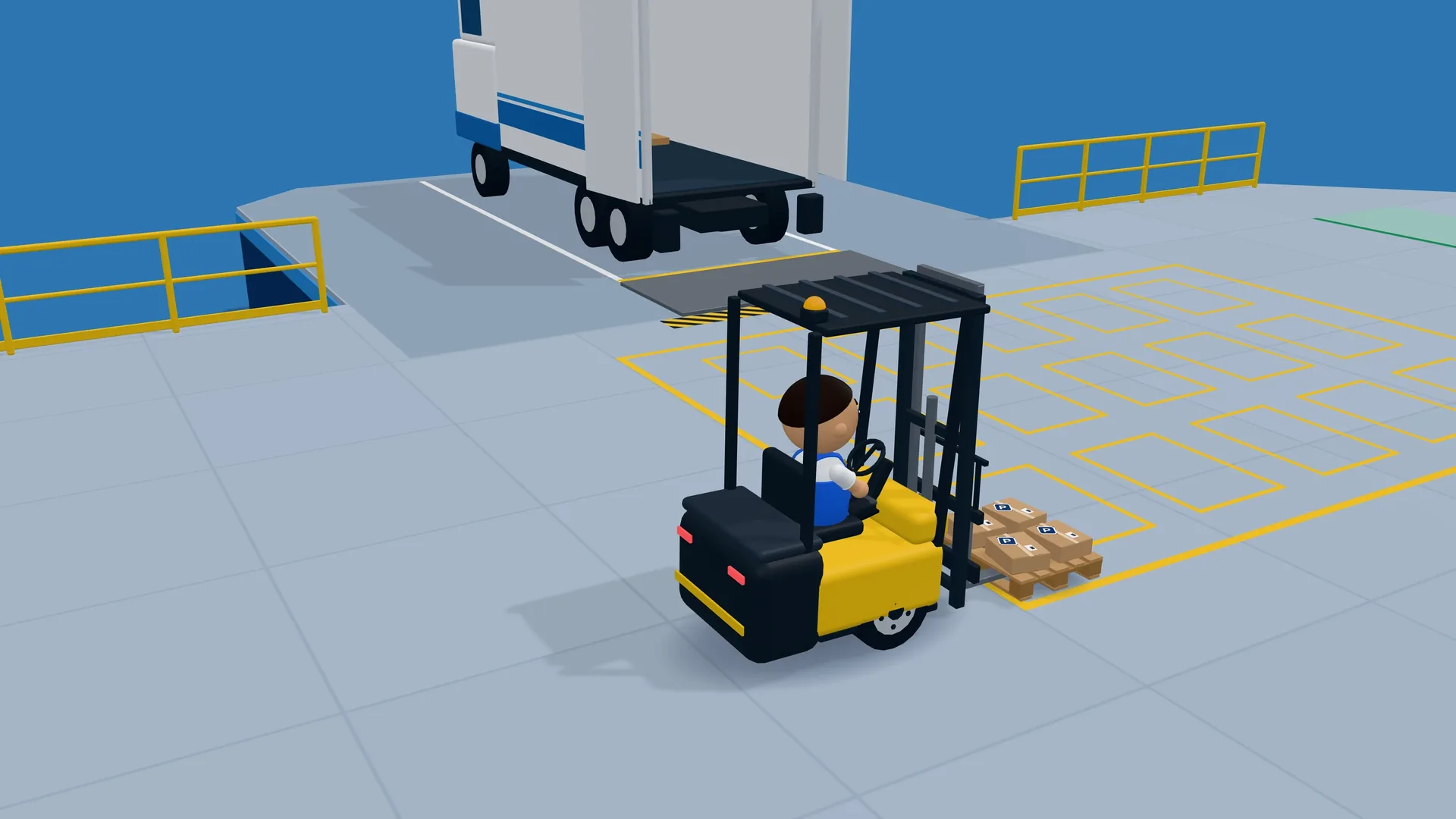
The forklift brings full mesh pallets to the stations and the customer pallets to the truck. In the last rounds a route train takes over the supply.
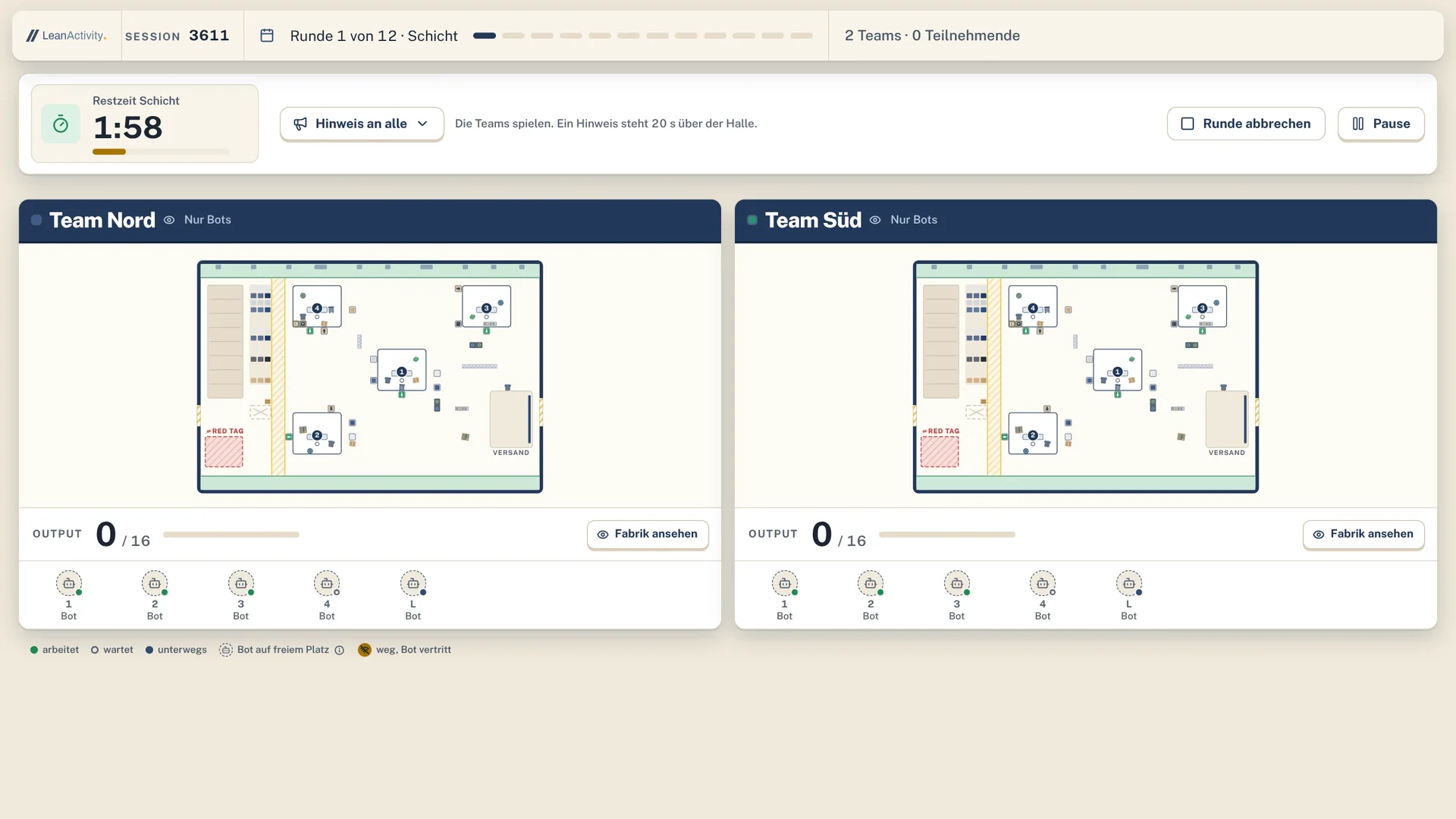
Hosts the session, in the room or in an MS Teams call, starts the rounds, follows every factory live in the cockpit, sends hints to all players and presents the results.
What you need
Ready when you are