The short answer
The 5 Whys is a simple root cause analysis: you ask “why?” about a problem, and about every answer, until you reach a cause you can switch off. Three moves:
1Pin down the problem
Describe it with facts: what, where, when and how much. Then go and see it where it happens.
Steps 1–22Ask why, and check
Ask why about each answer and check it with evidence before you go on. Stop at a cause you can remove.
Steps 3–43Fix it for good
Agree a countermeasure with an owner and a date, then measure whether the problem stays away.
Steps 5–6
Basics
What the 5 Whys are, and when to use them.
The 5 Whys is a method of root cause analysis. The Lean Enterprise Institute describes it as asking why repeatedly whenever a problem occurs, to get beyond the obvious symptoms to the root cause (Lean Lexicon, LEI). All you need is a flip chart, the right people and facts.
Five is a rule of thumb: “the specific number five is not the point”, says LEI. Stop at a cause you can change, not at a symptom, whether that takes three whys or seven. Some teams call it why-why analysis.
The classic example: a machine that stopped
- 1
Why did the machine stop?
There was an overload and the fuse blew.
- 2
Why was there an overload?
The bearing was not sufficiently lubricated.
- 3
Why was it not lubricated?
The lubrication pump was not pumping sufficiently.
- 4
Why was it not pumping sufficiently?
The shaft of the pump was worn and rattling.
- 5
Why was the shaft worn out?
There was no strainer attached and metal scraps got in.
Root cause
No strainer kept the metal scraps out of the pump.
Countermeasure
Attach a strainer. A new fuse or pump alone would not stop the failure from coming back.
Example by Taiichi Ohno (1988), as given in the Lean Lexicon, LEI.
The example comes from Taiichi Ohno, Toyota’s chief of production after the Second World War, who is credited with developing the Toyota Production System (Lean Lexicon, LEI). It shows the point of the method: the first answer, a blown fuse, is true but useless as a fix.
6 steps
How to do a 5 Whys analysis in 6 steps.
Each step has a quick check. The worked example follows one problem from start to finish and is also loaded in the builder below. Example figures are illustrations: put in your own.
Understand
Steps 1–2: problem and facts
1Define the problem with facts
Write one sentence: what happened, where, when and how much. Leave out causes and solutions: “the forklift is too slow” already contains a guess.
Quick check
Worked example
2Go to the gemba
See the problem where it happens, at the gemba: the machine, the workstation, the inbox. Talk to the people who do the work and collect the faulty part, the log or the order.
Quick check
Worked example
Analyse
Steps 3–4: the why chain
3Ask why, and check each answer
Ask why the problem occurred, then why about that answer. Each answer must be a fact you can check; if it is a guess, check it before the next why. If there are two answers, follow both.
Quick check
Worked example
4Stop at a cause you can switch off
Stop at a cause your team can remove, and whose removal keeps the problem from coming back. If the next why leads outside your influence (“customers order at short notice”), step back to the last cause you control.
Quick check
Worked example
Act
Steps 5–6: countermeasure and check
5Define countermeasures
Separate the quick containment from the permanent fix that removes the root cause. Give each action one owner and a date. A signal, a fixture or a checklist beats “be more careful”.
Quick check
Worked example
6Check the effect
Measure again after the change, the same way as before. If the problem is gone, make the fix the standard. If not, go back to the first answer you could not prove.
Quick check
Worked example
Examples
3 worked 5 Whys examples.
One from production, one from the office and a customer complaint with two branches: short answers, each one a fact, ending in a cause the team can remove. Example figures are illustrations.
Production
A part assembled wrong
Example 1: wrong motor
Problem
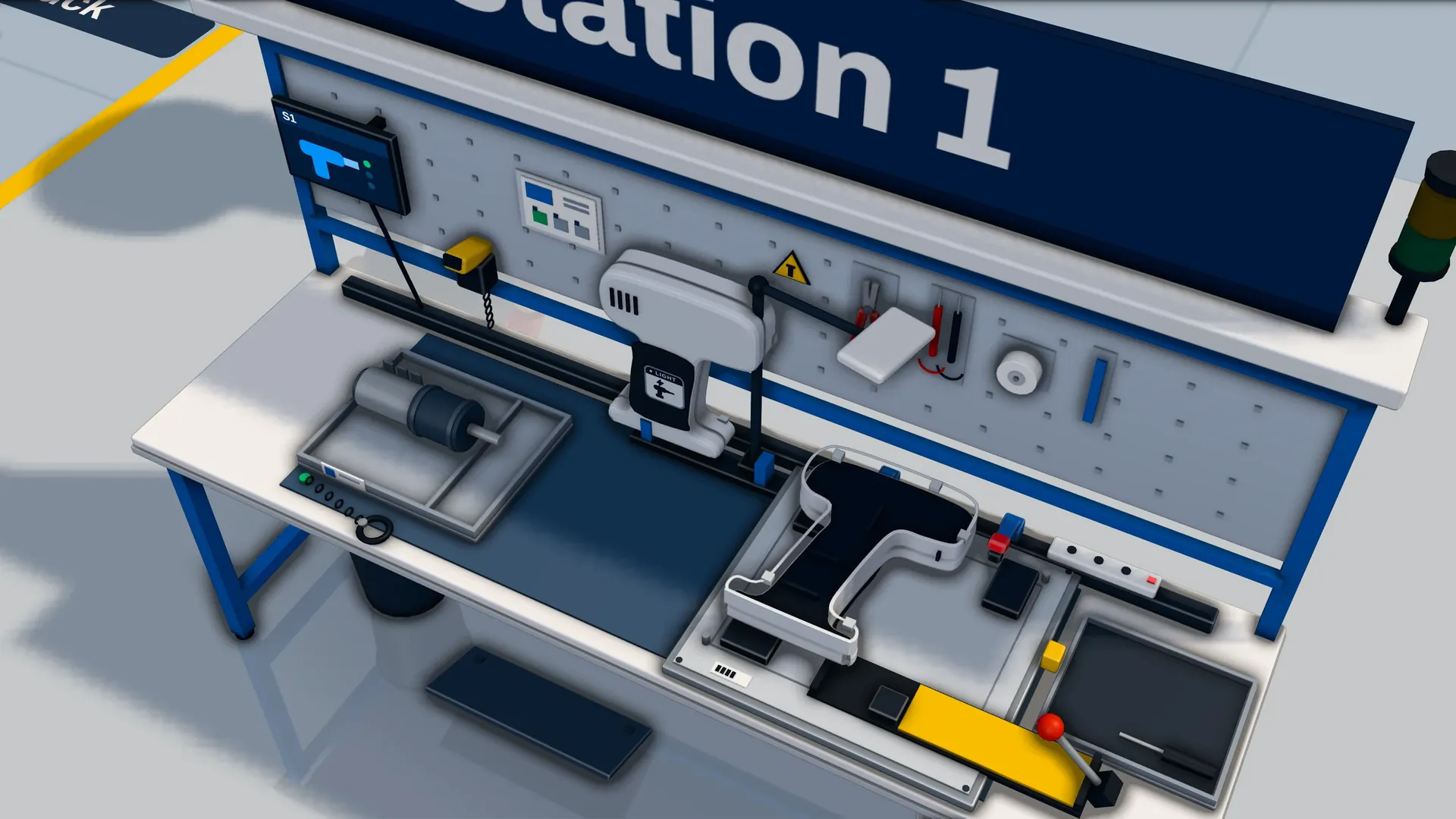
On Tuesday, 12 cordless screwdrivers of the Pro variant were built with the Light motor. Final test found them.
- 1
Why?
The operator took motors from the wrong box.
- 2
Why?
Light and Pro motors come in identical boxes, side by side on one shelf.
- 3
Why?
Both motors fit both housings, so nothing stops a mix-up.
- 4
Why?
The station was built for the Light variant; the Pro was added without changing it.
- 5
Why?
The launch checklist for new variants has no step for the workstations.
Root cause
Variant launches do not check that each station makes mix-ups impossible.
Countermeasure
Now: coloured boxes on separate shelves. For good: a fixture that only accepts the right motor (Poka-Yoke) and a station check in the launch checklist.
Office
Supplier invoices paid late
Example 2: late payments
Problem
In October, 9 of 140 supplier invoices were paid late. Two suppliers charged late fees.
- 1
Why?
They were approved after the due date.
- 2
Why?
Approval took 12 days on average after arrival (workflow log).
- 3
Why?
Most of that time the invoices lay in the accounts payable mailbox.
- 4
Why?
Staff first had to find out who had ordered: the invoices had no order number.
- 5
Why?
Suppliers are never asked to quote it; the order form does not mention it.
Root cause
Invoices arrive without an order number, so they cannot be routed straight away.
Countermeasure
Every order says “Quote this order number on your invoice”; invoices without it go back within a day. Late payments are reviewed monthly.
Customer complaint
Two branches: why it happened, why we missed it
Problem
A customer received 30 housings with scratches on the visible surface.
Two chains: why did the defect happen, and why did it reach the customer? Each needs its own fix.
Example 3a: why it happened
- 1
Why?
The housings rubbed together in the box during transport.
- 2
Why?
There were no separators between the layers.
- 3
Why?
The packing instruction was changed from 40 to 60 housings per box, without separators.
- 4
Why?
It was changed to save freight; nobody tested the effect on the parts.
Root cause
Packing changes are approved without a transport test.
Countermeasure
Separators back in; a transport test before any packing change.
Example 3b: why we missed it
- 1
Why?
Outgoing inspection did not find the scratches.
- 2
Why?
It checks dimensions and function, not the surface.
- 3
Why?
The check sheet is older than the high-gloss surface.
Root cause
The check sheet was not updated when the product changed.
Countermeasure
A visual surface check, with a photo of what is acceptable.
Four whys in one branch, three in the other: the number follows the problem.
5 Whys builder
Build your own 5 Whys analysis.
Write the problem and one answer per why, and tick each answer once you have checked it. You get a formatted analysis to copy into an e-mail, a ticket or an A3. It runs in your browser, nothing is sent or stored.
Your analysis
5 Whys analysis
Problem
On Monday’s early shift, station 2 stood still three times for a total of 35 minutes, waiting for housings.
- 1The box at the station was empty and the next one was still in the warehouse. checked
- 2The forklift driver did not know that station 2 needed it. checked
- 3He only sees the stock at station 2 when he passes by on his round, every 60 minutes. checked
- 4Since the new order mix, one box lasts only about 40 minutes. checked
- 5Supply runs on a fixed round, with no signal when the station needs more. checked
- Root cause
- Supply of housings runs on a fixed 60-minute round, with no signal when station 2 needs more.
- Countermeasure
- Two-bin Kanban: when the first box is empty, its card goes on a board in the aisle; the driver checks the board every 20 minutes.
- Owner: Logistics team lead · Due: open
- Check: Count stops for missing housings on a tally sheet at station 2 for four weeks. Target: none.
Before you close it
- Add a due date, so the countermeasure actually happens.
Read it backwards: the “therefore” test
- Supply of housings runs on a fixed 60-minute round, with no signal when station 2 needs more.
- therefore Supply runs on a fixed round, with no signal when the station needs more.
- therefore Since the new order mix, one box lasts only about 40 minutes.
- therefore He only sees the stock at station 2 when he passes by on his round, every 60 minutes.
- therefore The forklift driver did not know that station 2 needed it.
- therefore The box at the station was empty and the next one was still in the warehouse.
- therefore On Monday’s early shift, station 2 stood still three times for a total of 35 minutes, waiting for housings.
If a “therefore” sounds wrong, a link is missing or an answer is a guess.
Runs in your browser, nothing is sent or stored.
Template
5 Whys template to copy.
Copy the template into your notes or a ticket and fill in the [brackets]: one sheet per problem, a second column when an answer splits. More checklists are in our Lean templates.
Template to copy
5 Whys analysis
5 Whys analysis: [short title]
Date: [date] · Team: [names] · Facilitator: [name]
Problem:
What: [what exactly went wrong]
Where: [line, station, process or department]
When: [date, shift, since when]
How much: [count, minutes, cost or share]
Why chain:
Why 1: [answer] · Evidence: [what we saw or measured]
Why 2: [answer] · Evidence: [evidence]
Why 3: [answer] · Evidence: [evidence]
Why 4: [answer] · Evidence: [evidence]
Why 5: [answer] · Evidence: [evidence]
Root cause: [a cause we can switch off]
Read backwards with “therefore”: the chain holds
No answer blames a person
Countermeasures:
Containment now: [action] · Owner: [name] · Due: [date]
Permanent fix: [action] · Owner: [name] · Due: [date]
Check of the effect:
Measure: [the same figure as in the problem]
Check date: [date] · Result: [figure]
Problem gone: the countermeasure becomes the standard
Problem still there: back to the first unproven answer
Common mistakes
6 common 5 Whys mistakes, and what to do instead.
Blaming a person
“The operator was careless” starts a hunt for culprits, and next time nobody reports the problem.
Instead: Ask why the process allowed the mistake.
Guessing instead of checking
A plausible answer in the meeting room is a hypothesis. A chain of guesses fixes the wrong cause.
Instead: Check each answer at the gemba, in the log or with a count.
Stopping too early
“The fuse blew” is true, and a new fuse restarts the machine. Then it stops again.
Instead: Keep asking until removing the cause stops the problem from returning.
Following only one branch
Many problems have two causes, and why it happened differs from why nobody noticed.
Instead: Split the chain when an answer has two parts.
Solutions in disguise
“Because we have no new machine” is a wish, not a cause.
Instead: Ask what exactly goes wrong today. The fix often costs far less.
No check of the effect
An unmeasured countermeasure is a hope: nobody knows if the root cause was the real one.
Instead: Book the date to measure again when you agree the fix.
The countermeasure is often a classic Lean tool: a Poka-Yoke against wrong parts, standard work against variation, a Kanban against missing material. The 8 wastes help you spot the problems worth a 5 Whys.
Comparison
5 Whys vs fishbone diagram.
The fishbone, also called Ishikawa or cause-and-effect diagram, collects possible causes in categories; the 5 Whys goes deep along one chain. They work best together.
| 5 Whys | Fishbone (Ishikawa) diagram | |
|---|---|---|
| Question | Why did this happen, and why did that happen? | What could cause this? |
| Direction | Deep: one chain, step by step, down to the root cause | Wide: many possible causes side by side |
| Shape | A chain, or a tree when answers split | A fish skeleton: the problem is the head, the categories are the bones |
| Best for | Simple to medium problems with a clear chain of cause and effect | Problems with many possible causes, at the start of an analysis |
| Typical time | 10–30 minutes per problem | 20–45 minutes |
| Risk | Follows one branch and misses others | Lists causes without checking which are real |
| Result | A root cause and a countermeasure | A list of suspected causes to check |
01
Collect widely
Draw the fishbone with categories such as people, methods, machines, materials, measurement and environment.
02
Check the suspects
Mark the causes you can prove with data or at the gemba. Cross out the rest.
03
Go deep
Run a 5 Whys on each confirmed cause until you reach something you can switch off.
PDCA and A3
Where the 5 Whys fit: PDCA and the A3 report.
The 5 Whys is the analysis inside a larger improvement cycle: PDCA (Plan, Do, Check, Act). The chain gives the Plan its root cause; the cycle makes sure the fix is tried, measured and kept.
Plan
Understand and decide
- Describe the problem with facts
- Find the root cause with the 5 Whys
- Choose a countermeasure, an owner and a date
Do
Try it
- Make the change, on a small scale first
- Note what you actually did
Check
Measure
- Measure the same figure as at the start
- Compare it with the target
Act
Standardise or go back
- Working: make it the standard and train everyone
- Not working: return to the chain and find the missing link
Workshop
A 5 Whys session in a Kaizen workshop.
In a Kaizen workshop, the 5 Whys follows the gemba walk: the team has seen the waste and now asks why it exists. Plan about 45 minutes per problem, for the three biggest at most.
| Time | Step | Facilitator tip |
|---|---|---|
| 5 min | Write the problem statement on the flip chart | Insist on a number: how often, how long, how many |
| 10 min | Short return to the gemba | Bring back the part, the photo or the log entry |
| 20 min | Build the why chain with sticky notes | One answer per note; mark unproven answers with a question mark and check them first |
| 10 min | Root cause, countermeasure, owner, date | Read the chain backwards with “therefore” before the team agrees |
LeanActivity
Practise root cause analysis in a Lean game.
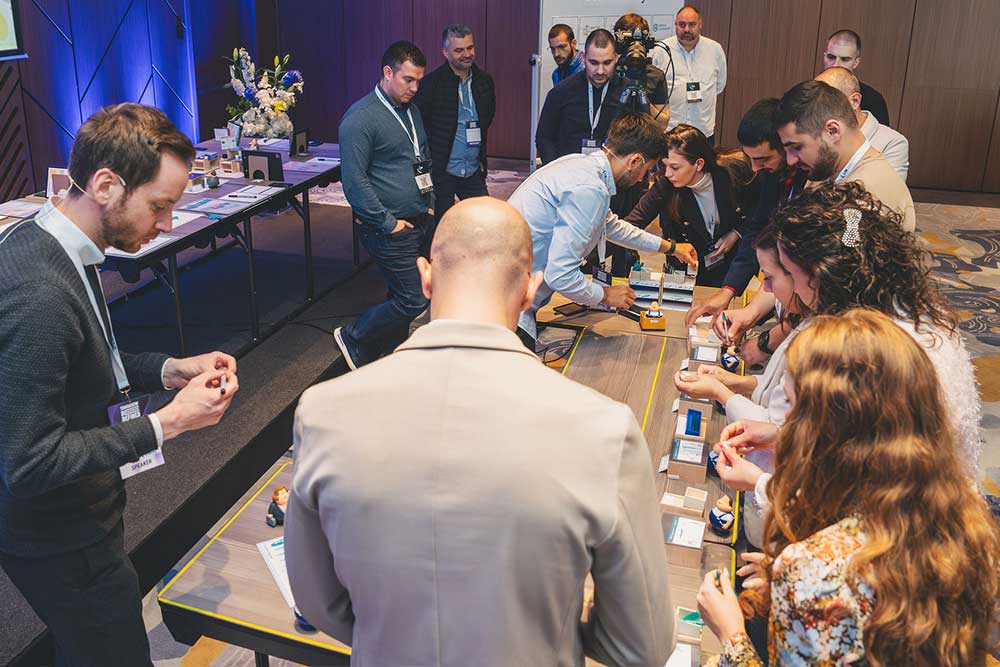
Root cause analysis is hard to learn from slides, because the examples are always someone else’s. In a Lean game the team creates its own problems: a waiting station, a late delivery, rework. Everyone saw it, so the why chain starts from shared facts.
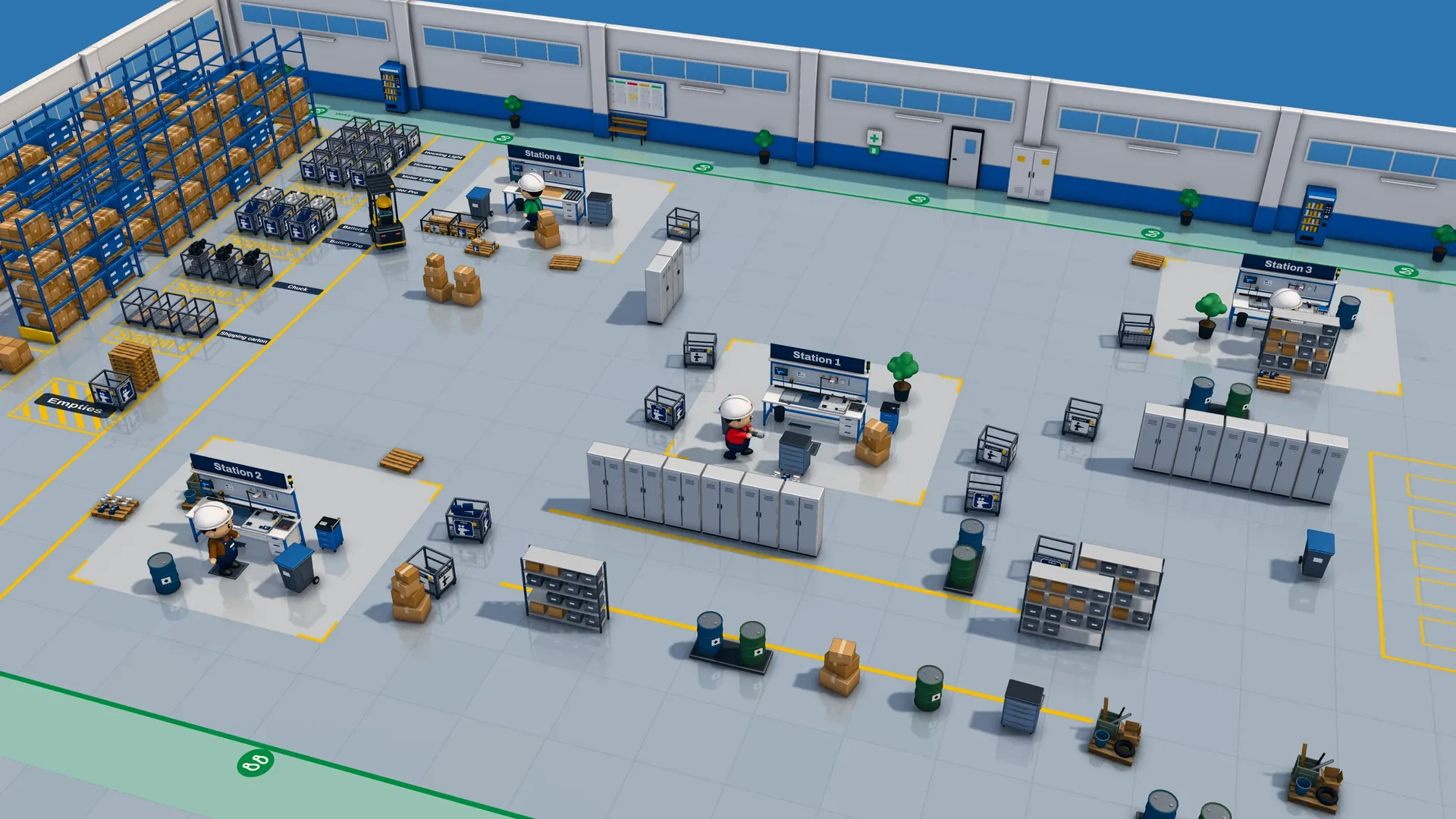
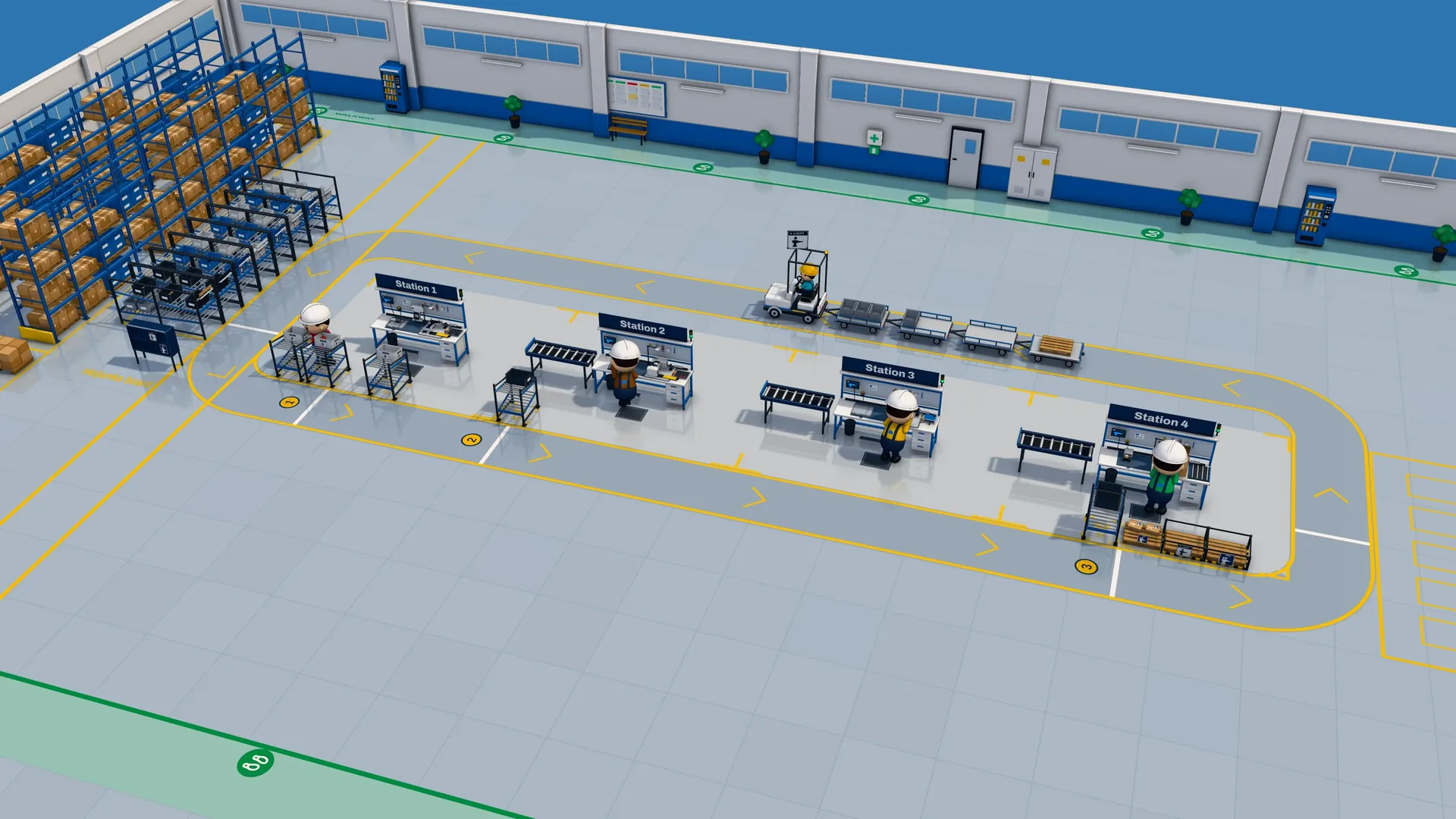
In the LeanActivity Online Game, the team sees 8 KPIs after every shift, such as delivery reliability and rework. Ask why a figure went wrong, change the factory in the next improvement workshop, and the next shift shows whether you found the real cause: the 5 Whys and PDCA in a session of about two hours.
Browser · 1–20 players
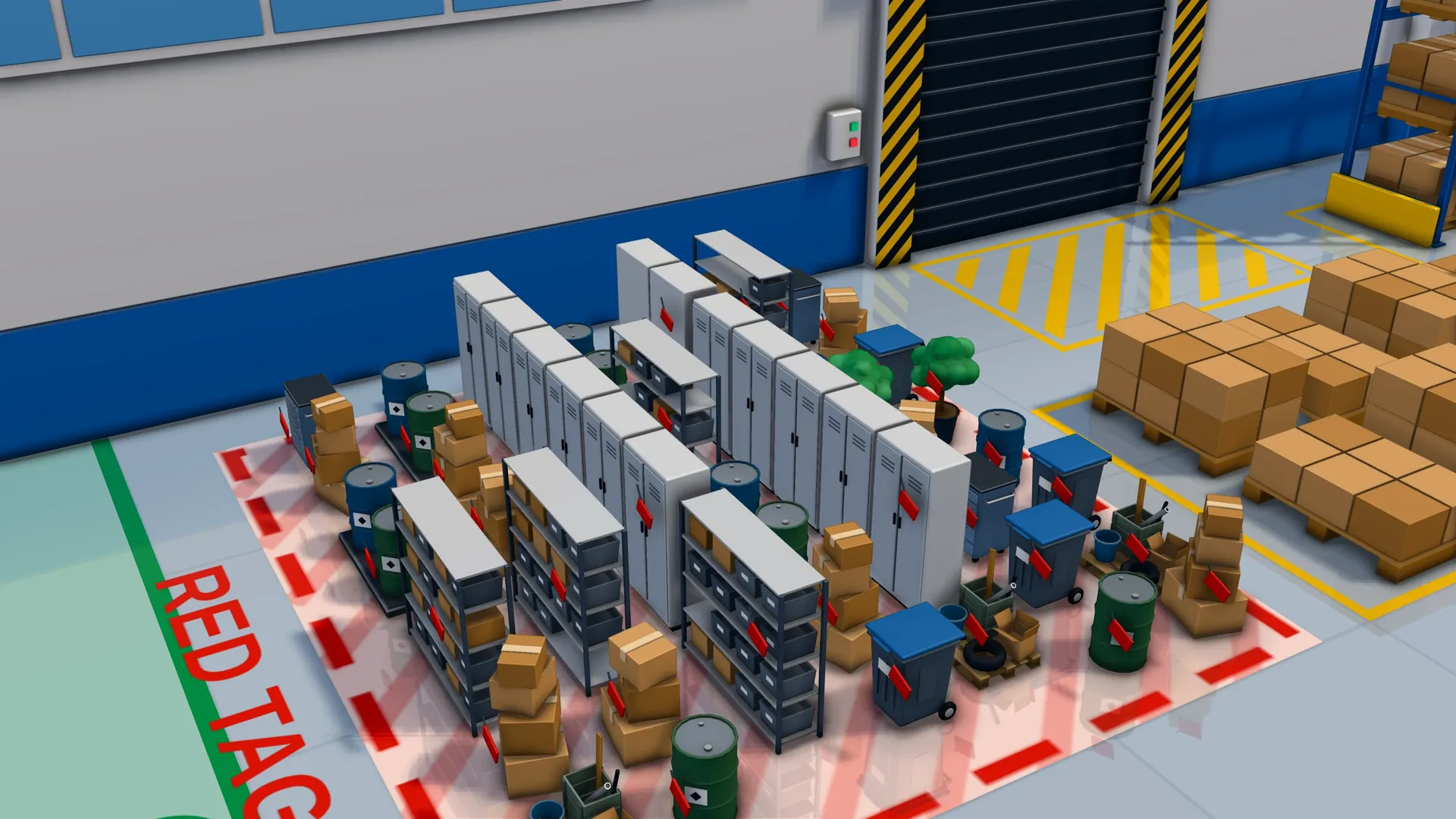
LeanActivity Online Game
A 3D factory in the browser: 12 rounds, 5 shifts and 7 improvement workshops in teams of 5, led by a moderator.
See the Online Game
Tabletop kit · 6–16 players
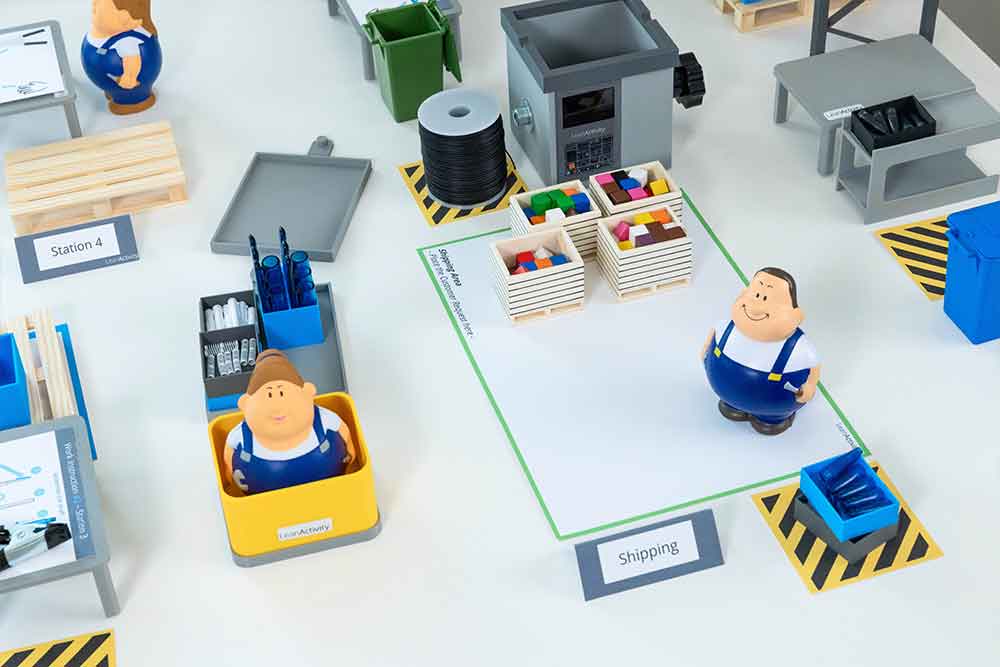
LeanActivity Factory Game
The physical Lean factory on the table: figures, parts and stations for workshops in the training room.
See the Factory Game
The Online Game demo runs in the browser, no installation.
FAQ
5 Whys: common questions.
What are the 5 Whys?
The 5 Whys is a simple method of root cause analysis. You ask why a problem occurred, then why about the answer, until you reach a cause you can remove. Five rounds is a rule of thumb.
Who developed the 5 Whys?
The method is associated with Taiichi Ohno, who is credited with developing the Toyota Production System. The Lean Enterprise Institute’s Lean Lexicon illustrates it with his example of a machine that stopped because metal scraps got into the lubrication pump.
Do you always have to ask why five times?
No. The Lean Lexicon says the specific number five is not the point. Stop at a cause your team can remove and whose removal stops the problem from coming back, whether that takes three whys or seven.
What is a good 5 Whys example?
Taiichi Ohno’s stopped machine: the fuse blew from an overload, the bearing lacked lubrication, the pump did not pump enough, its shaft was worn, and no strainer kept the metal scraps out. A new fuse fixes the symptom; a strainer removes the cause.
How do you do a 5 Whys root cause analysis?
Define the problem with facts, go to where it happens, ask why and check each answer with evidence, and stop at a cause you can switch off. Then agree a countermeasure with an owner and a date, and measure whether the problem stays away.
What is the difference between the 5 Whys and a fishbone diagram?
A fishbone (Ishikawa) diagram goes wide and collects possible causes in categories. The 5 Whys goes deep along one chain to a root cause. Many teams draw the fishbone first, check which causes are real and run a 5 Whys on those.
When should you not use the 5 Whys?
When many causes interact, such as quality that depends on several process settings at once, you need data and trials instead of one chain of whys. It is also the wrong tool for choosing between options or for replacing a formal safety investigation.
What is a why-why analysis?
Why-why analysis is another name for the 5 Whys. Some teams use it for the branched version, in which an answer can split into several causes and each branch is followed to its own root cause.